Dire Report from Epicenter Bergamo

Screen Shot 2020-03-22 at 5.19.47 PMClick and watch this disturbing video from a Bergamo hospital

A new report published by the New England Journal of Medicine (NEJM; arguably the top medical journal in the world) makes the point that hospitals are major sites of corona-virus transmission and home care (community-centered care) would be a better model.  It is also a dramatic plea for help.

At the Epicenter of the Covid-19 Pandemic and Humanitarian Crises in Italy: Changing Perspectives on Preparation and Mitigation.

March 21, 2020.

Mirco Nacoti, MD,, Andrea Ciocca, MEng, Angelo Giupponi, MD, Pietro Brambillasca, MD, Federico Lussana, MD, Michele Pisano, MD, Giuseppe Goisis, PhD, Daniele Bonacina, MD, Francesco Fazzi, MD, Richard Naspro, MD, et al.

In a Bergamo hospital deeply strained by the Covid-19 pandemic, exhausted clinicians reflect on how to prepare for the next outbreak.

Summary

In a pandemic, patient-centered care is inadequate and must be replaced by community-centered care. Solutions for Covid-19 are required for the entire population, not only for hospitals. The catastrophe unfolding in wealthy Lombardy could happen anywhere. Clinicians at a hospital at the epicenter call for a long-term plan for the next pandemic.

We work at the Papa Giovanni XXIII Hospital in Bergamo, a brand-new state-of-the-art facility with 48 intensive-care beds. Despite being a relatively small city, this is the epicenter of the Italian epidemic, listing 4,305 cases at this moment — more than Milan or anywhere else in the country (Figure 1). Lombardy is one of the richest and most densely populated regions in Europe and is now the most severely affected one. The World Health Organization (WHO) reported 74,346 laboratory-confirmed cases in Europe on March 18 — 35,713 of them in Italy.

Figure 1 .

Figure 1

Our own hospital is highly contaminated, and we are far beyond the tipping point: 300 beds out of 900 are occupied by Covid-19 patients. Fully 70% of ICU beds in our hospital are reserved for critically ill Covid-19 patients with a reasonable chance to survive. The situation here is dismal as we operate well below our normal standard of care. Wait times for an intensive care bed are hours long. Older patients are not being resuscitated and die alone without appropriate palliative care, while the family is notified over the phone, often by a well-intentioned, exhausted, and emotionally depleted physician with no prior contact.

But the situation in the surrounding area is even worse. Most hospitals are overcrowded, nearing collapse while medications, mechanical ventilators, oxygen, and personal protective equipment are not available. Patients lay on floor mattresses. The health care system struggles to deliver regular services — even pregnancy care and child delivery — while cemeteries are overwhelmed, which will create another public health problem. In hospitals, health care workers and ancillary staff are alone, trying to keep the system operational. Outside the hospitals, communities are neglected, vaccination programs are on standby, and the situation in prisons is becoming explosive with no social distancing. We have been in quarantine since March 10. Unfortunately, the outside world seems unaware that in Bergamo, this outbreak is out of control.

Western health care systems have been built around the concept of patient-centered care, but an epidemic requires a change of perspective toward a concept of community-centered care. What we are painfully learning is that we need experts in public health and epidemics, yet this has not been the focus of decision makers at the national, regional, and hospital levels. We lack expertise on epidemic conditions, guiding us to adopt special measures to reduce epidemiologically negative behaviors.

For example, we are learning that hospitals might be the main Covid-19 carriers, as they are rapidly populated by infected patients, facilitating transmission to uninfected patients. Patients are transported by our regional system,1 which also contributes to spreading the disease as its ambulances and personnel rapidly become vectors. Health workers are asymptomatic carriers or sick without surveillance; some might die, including young people, which increases the stress of those on the front line.

This disaster could be averted only by massive deployment of outreach services. Pandemic solutionsare required for the entire population, not only for hospitals. Home care and mobile clinics avoid unnecessary movements and release pressure from hospitals.2 Early oxygen therapy, pulse oximeters, and nutrition can be delivered to the homes of mildly ill and convalescent patients, setting up a broad surveillance system with adequate isolation and leveraging innovative telemedicine instruments. This approach would limit hospitalization to a focused target of disease severity, thereby decreasing contagion, protecting patients and health care workers, and minimizing consumption of protective equipment. In hospitals, protection of medical personnel should be prioritized. No compromise should be made on protocols; equipment must be available. Measures to prevent infection must be implemented massively, in all locations and including vehicles. We need dedicated Covid-19 hospital pavilions and operators, separated from virus-free areas.

This outbreak is more than an intensive care phenomenon, rather it is a public health and humanitarian crisis.3 It requires social scientists, epidemiologists, experts in logistics, psychologists, and social workers. We urgently need humanitarian agencies who recognize the importance of local engagement. WHO has declared deep concern about the spread and severity of the pandemic and about the alarming levels of inaction. However, bold measures are needed to slow down the infection. Lockdown is paramount: social distancing reduced transmission by about 60% in China. But a further peak will likely occur when restrictive measures are relaxed to avoid major economic impact.4 We strongly need a shared point of reference to understand and fight this outbreak. We need a long-term plan for the next pandemic.

Coronavirus is the Ebola of the rich and requires a coordinated transnational effort. It is not particularly lethal, but it is very contagious. The more medicalized and centralized the society, the more widespread the virus. This catastrophe unfolding in wealthy Lombardy could happen anywhere.
Posted in Coronavirus, Health Care, Trump, Uncategorized | Tagged , , , , | Leave a comment

South Korea: Aggressive COVID-19 Strategies

PHOTO-2020-03-15-23-06-30


S. Korea is one of the few countries that have “flattened the curve”.  How did they do it?


South Korea learned its successful Covid-19 strategy from a previous coronavirus outbreak: MERS

By HyunJung Kim, March 20, 2020

This is a fascinating story.  Here is an excerpt:

Korea’s response to Covid-19 is highlighting a strong public health approach to reigning in the outbreak, one that provides a lesson for the rest of the world. For the country’s health officials, however, it’s a lesson they learned the hard way. Korea’s traumatic experience with a 2015 outbreak of Middle East Respiratory Syndrome, or MERS, paved the way for many of the successful strategies the government is deploying this time around.  Read more about the MERS experience here.


After news of the coronavirus outbreak began to emerge from Wuhan, China, earlier this year, the Korean government activated a 24/7 emergency response system to screen all travelers entering the country from that city. A woman was stopped at Incheon Airport en route for Japan at a fever monitoring station and transferred to a hospital where she was quarantined for 14 days. The Covid-19 diagnosis was confirmed on January 20. As it happens, that’s the same day the first US case was reported.

Since the first cases were confirmed, Korean public health authorities and local governments collaborated to precisely document the movement of infected people down to the minute. Authorities sought testimony, watched closed-circuit television, investigated smartphone GPS data and more, publicizing the so-called moving histories of Covid-19 patients. All local governments share information through websites, text messages, and media. Companies have developed apps that allow users to visualize the information. Koreans can now learn where infected people went, when they were there, and how they got there. If someone learns they might have been exposed, they can quickly visit a doctor and begin self-quarantine if they have similar symptoms.

On February 4, the Korea Centers for Disease Control and Prevention took advantage of the post-MERS reform and authorized an unlicensed Covid-19 test; the government went on to test an extraordinary number of people. By February 26, Korea had tested 46,127 cases, while by that point, Japan had tested just 1,846 cases and the United States only 426.

Posted in Coronavirus, Health Care, Uncategorized | Tagged , , , , , , | Leave a comment

Doctors Feeling Outrage

Screen Shot 2020-03-20 at 9.01.09 PM

Coronavirus tragedy: Chinese doctor who postponed wedding to treat patients dies of infection.  Feb 21,2020.


From Norbert Goldfield (Ask Nurses and Doctors LLC, AND)

Three updates from AND

  1. From Andrew Goldstein. If you read anything today – read this.

I’m watching my hospital, my city, and my world be hit by surges of people sick with COVID19. I know people who have lost loved ones already, and I know health workers who are sick.

But this is actually the tense silence before the storm. The real tidal wave is yet to come and it is still somewhat preventable, if only we intensify our public health approach immediately and ensure it is equitable and humane. With that in mind, my colleague Akash Goel MD and I wrote this plea in The Hill today:

A plea from NYC physicians: Our window of opportunity is closing to avoid Italy’s fate

We know there are challenges and concerns about such measures but I think we can solve them. I hope you will share this message. We must follow the lead of countries that have taken these massively life-saving steps earlier, or we’ll likely join the ones that regretted not doing so.

Spread the word NOW.

2.  It was a matter of time. One of my colleagues, is a retired non practicing physician on life support with Covid-19. One friend has been hospitalized. Despite this challenge, the administrator of our practice emotionally said to me yesterday how each and every physician has volunteered to do more. 200 health professionals in the Baystate system that I am part of are under quarantine. Conditions for which I would ordinarily see the patient – were all managed by phone yesterday.

3. For those interested in more details on our emerging understanding of covid 19 and its antecedents pls sign up for regular updates and the latest research from NIH. https://www.nih.gov/health-information/coronavirus

4. We need to keep in mind who is responsible for the Covid-19 debacle in this country; who is responsible for cutting back just passed legislation on paid leave (any number of the medical assistants I work with are at home with their kids instead of at work); who is blithely stating falsehoods time and time again; who could have taken action but didn’t  – it is the executive branch (with help from the U.S. Senate).  See these links:

https://www.nytimes.com/2020/03/15/opinion/trump-coronavirus.html?searchResultPosition=8

https://www.nytimes.com/2020/03/20/us/coronavirus-poverty-school-lunch.html/

https://www.politico.com/news/2020/03/19/trump-slash-red-tape-to-find-coronavirus-drugs/

https://www.nytimes.com/2020/03/20/us/politics/trump-coronavirus-supplies.html?action=click&module=Spotlight&pgtype=Homepage;

Please act on your outrage via letters to the editor; op-eds; uploads on you-tube videos or any other form of communication  We are happy to help review any communication you choose to write.   Norbert Goldfield MD  and David Posnett MD

Posted in Coronavirus, Health Care, Trump, Uncategorized, Zeldin | Tagged , , , | Leave a comment

Trump Shirks Responsibility

Letter to the Editor, The East Hampton Star, March 19 edition

An Inspiration
East Hampton
March 16, 2020

To the Editor:

When asked at a press conference last Friday if he takes responsibility for the lack of coronavirus test kits, the president said, “No, I don’t take any responsibility for it at all.”

Enough. Since January it was clear this emerging virus was going to be a problem. Trump could have used the past three months to involve every federal agency in preparing for and dealing with the impending crisis. Instead, we got finger pointing and tweets ranging from “we have it totally under control” (Jan. 22) to “the coronavirus is very much under control.” (Feb. 24) Not.

The president’s disdain for experts has led him to ignore them at every turn. He has repeatedly insisted that a coronavirus vaccine is weeks or months away, only to be corrected by his own officials that it will take at least a year for one to be developed.

When asked at the same conference why the White House pandemic response team was disbanded and never replaced in 2018, Trump snapped, “That’s just a nasty question. I don’t know anything about it.” Nope. Not taking responsibility for that, either.

When it was Pence’s turn at the mic, he declared, “This day should be an inspiration to every American.” Yes. An inspiration to every American to vote in November and elect a president who is intelligent, thoughtful, empathetic, and able to shoulder the responsibility of leading the country during a national emergency.

Sincerely,

CAROL DEISTLER

Posted in Uncategorized | Leave a comment

The Terminology of Keeping Distance


The terminology comes from the public health field but most of us struggle to comprehend the exact meaning and what should be applied in our own situation.

800SocialDistancingAP


“Social Distancing: This Is Not a Snow Day.” To slow the coronavirus, wrote Dr. Asaf Bitton, we must act quickly and start “making daily choices to stay away from each other as much as possible.”

Social distancing is ultimately about creating physical distance between people who don’t live together. It means closing schools and workplaces, canceling concerts and Broadway shows. For individuals, it means keeping six feet of distance between you and others and avoiding physical contact.

It means no dinner parties, no playdates, no birthday parties even with a few friends.

Who should do this? Everyone.

1000x-1

This means stay home. Don’t leave the house unless you absolutely have to. Don’t socialize with people outside your family. Don’t go to a friend’s house for dinner or invite a trusted friend over.

You are allowed to go outside for essentials (groceries or prescriptions) but you should limit those trips to no more than once a week if possible. People with essential jobs — public safety, medical, sanitation or grocery worker — can still go to work. And you can visit someone if you are their caregiver.

You can walk the dog or exercise outside as long as you keep a six-foot distance from others.


Advertisement

Continue reading the main story

Who should do this? Everyone who lives in an area with a mandatory shelter-in-place order (Northern California and possibly, soon, New York City). But many infectious disease experts say that everyone else should voluntarily shelter in place.

Screen Shot 2020-03-19 at 11.20.30 PM

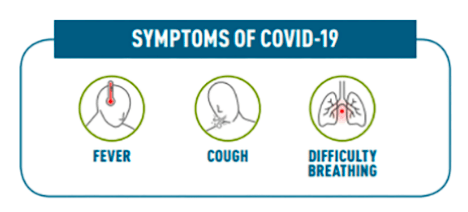
Checking your temperature,  and watching for signs of coronavirus infection (fever, shortness of breath and coughing, flu-like symptoms.) A person who is self-monitoring should already be staying home and limiting interactions with others.

Who should do this?those with possible exposure to the virus but had only distant contact with the infected person.

911b1c-20200312-covid-drive-thru02

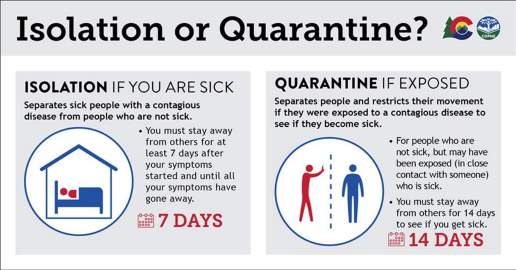
This term is used to separate and restrict the movement of someone who is well but who recently had close contact with a person who later was diagnosed with the virus. A person in self-quarantine should follow all the rules of sheltering in place, except they should avoid going to stores or interacting with the public even on a limited basis for a 14-day period. (A friend should bring you groceries.)

A person in self-quarantine should sleep in a separate space from other family members.

Who should do this? Persons without symptoms, but with a contact history (with someone who later became ill.)


AR-200319576

Isolation is used to separate a person who has a diagnosed case or someone who has distinct symptoms including a cough, fever and shortness of breath, but hasn’t yet been tested or received test results. A person in isolation should be confined to a separate room with no or minimal contact with the rest of the household (including pets) and use a separate bathroom if possible. Most of the time, a sick person will feel a bit miserable, but he or she can pick up food trays left at the door. Sanitize a shared bathroom after using it.

Who should do this?  Anyone with a confirmed case of Covid-19, a person waiting for test results or a person with obvious symptoms who is still waiting to be tested. Everyone else in the household should self-quarantine.


2020_03_02_87952_1583120475._large

A government-imposed lockdown on a community, as has happened in Italy, in which movements are severely restricted. People can still go out for essentials and to get fresh air, but they can do so only under strictly controlled conditions or on a specific schedule imposed by public safety officials.

Who should do this? Everyone who lives in an area under quarantine. “We haven’t seen this in the U.S.,” according to Dr. Bitton, but certainly in Wuhan, Hubei, Italy, and other countries.

Posted in Coronavirus, Health Care, Uncategorized | Tagged , , , , , , | 1 Comment

The Economic Impact of the Virus

Screen Shot 2020-03-19 at 5.47.23 PM


A monument near the office where I worked in Washington, D.C., until Sunday bears this quote by the Argentinean Jose Narosky: “In war there are no unwounded soldiers.”

We can say the same thing about the warlike shock of the COVID-19 pandemic. Many of us have suffered already. We will all suffer in some way. If we learn from the record, however, we can take steps to minimize the impact.

My basic message is that there is a trade-off. Slowing the spread of the virus will extend the period in which the virus is present and may not reduce the number of people who are infected. What isolation will do, however, is reduce the death rate by lessening the overwhelming of Suffolk County hospitals and clinics. Britain is a week or more ahead of the United States, and the hospitals are pulling in final-year medical and nursing students; they are also bringing back recently retired doctors, including my own sister, who are at higher risk because of their age.

We want to avoid getting to Italy’s desperate situation, where crowded hospitals are making hard triage decisions, not accepting patients over 80, who are left to be cared for, and often die, at home. Staying at an understaffed hospital with too many diseased, highly contagious patients could be a death sentence anyway. They may be better off at home.

When I was chief economist for three New York City comptrollers, under Mayors Dinkins, Giuliani, and Bloomberg, I prepared the official estimates of the economic impact on New York City of the terrorist attacks on the World Trade Center in 1993 (nearly $1 billion) and Sept. 11, 2001 (approximately $90 billion). The 9/11 attacks resulted in a $20 billion package for New York City, and large investments and annual expenses in public security, including security stops at airports.

When a major shock happens, governments need to act as soon as possible. Yet officials need time to process the challenge so that they prepare in the right way. Beds in New York City hospitals, for example, were emptied out and fully staffed to care for injuries after the 9/11 attacks, but the wounded never came. This time, the COVID-19 trauma will indeed require hospitals and personnel. Their preparedness will determine the number of deaths.

The lesson from the crash of 2008 is that the emphasis should be on putting money in the hands of consumers so they can keep the wheels of commerce turning. Senator Mitt Romney has suggested giving every American $1,000 to address the coming recession. He has the right idea.

For more than a year, I have been senior economist for the Joint Economic Committee of the Congress, including when Representative Carolyn Maloney was vice chairwoman. I prepared a report on Trump’s China tariffs, the impact on the U.S. retail supply chain, and the plight of that sector. This made me an early student of the economic impact of the coronavirus.

In early March, the World Bank was still projecting 2.5-percent global growth in 2020, above the “post-crisis” low in 2019. The International Monetary Fund also forecast growth, but at a slower rate. Morgan Stanley predicted that even with a pandemic, growth would exceed 2 percent; the Organisation for Economic Co-Operation and Development projected that a pandemic would cut the growth rate in half. The verdict of the stock and bond markets since then has been profoundly negative. In round numbers, the Dow peaked at 29,400 on Valentine’s Day. By the morning of St. Patrick’s Day the Dow was struggling to stay above 20,000. One-third of the value of this market was lost in a month. Three years of growth in the Dow disappeared.

On Monday, Gregory Daco of Oxford Economics said, “We’re calling the recession.” A Financial Times survey of economists was headlined “Global Recession Already Here.” The Federal Reserve’s two rate cuts, down 1.5 percentage points, just seem to have added to the financial panic.

The United States is fortunate that Asia and European countries faced the virus first. Italy’s experience is shocking because the death rate is much higher than China’s. China was able to build a new hospital in Wuhan in just 10 days. Italy was slower to act and has a considerably older population.

A model popularized by Nicholas Kristof of The New York Times shows why early action is crucial. It assumes 100 million U.S. infections by the coronavirus. With early intervention, the number of U.S. deaths is kept to 324,000, a death rate of 0.3 percent. If action is delayed, however, the number of deaths triples to one million, a death rate of 1 percent of infections. This is a conservative estimate based on what happened in Italy, where as of Monday the number of reported cases was 27,980 and the deaths 2,158, a frighteningly high death rate of 7.7 percent. Italy’s slow action was especially dangerous for its elderly population; it has the second-highest percentage of elderly people in the world. Japan has the highest.

France (2 percent) and Spain (3 percent) have lower death rates in part because they learned from Italy and have taken extreme measures and because their population is younger. Death rates are well below 1 percent in two countries that acted decisively to slow the spread of the disease — Germany (0.2 percent) and South Korea (0.9 percent). These may be the models to follow.

By Monday, more than 183,400 people had been reported infected with the coronavirus worldwide and 7,200 had died from it. In the United States more than 3,800 cases have been reported nationwide and 60 deaths, of which one-third were residents and staff in one nursing home near Seattle. The numbers for New York State were 1,374 reported cases as of Tuesday and 12 deaths.

The numbers could not be clearer. Active intervention saves lives. Governor Cuomo and Mayor de Blasio are doing the right thing by closing schools, restaurants, and bars. Intervention is already too little, too late, especially the lack of testing kits. What is needed now is effective mitigation — decisive action to slow down the spread of the virus.

Economically, Suffolk County is vulnerable because jobs here have not been growing in the past year, despite the fact that New York State is performing above the national average. The coronavirus and the stock market crash that it (and the return of excessive risk-taking by financial institutions) caused have not been helping. Even if the Fed’s cuts in interest rates to .25 to 0 percent help the market over time, public attitudes toward the market and the economy have shifted negatively.

East Hampton will benefit economically in the short term from the fact that many New Yorkers want to get away from the city ASAP, so rentals should be strong for the spring. When they get here, however, they will probably want to self-isolate. Year-round residents may be just as grateful if well-traveled out-of-towners stay in their homes. It will be many weeks before our retail stores, restaurants, and bars return to 2019 levels of activity.

How badly the East End and Suffolk County will be affected will depend on how well this area slows down the spread of the disease and increases the capacity of its hospitals and other health-related facilities. Imagine a scenario in which three times more patient beds and equipment such as ventilators are required than East End hospitals and clinics can at present provide. What kinds of planning and actions must we do now to provide for new isolation centers? How does one feed and care for the overflow while protecting those who are caring for this population? What facilities exist now that in April and May could be used as auxiliary care facilities?

If a patient decides to stay home, what kinds of help are needed? Do we need to have more people trained on an emergency basis to look after homebound patients? What equipment will they need? What substitutes can be prepared if ideal equipment is not available? Stay tuned to The East Hampton Star, which will doubtless get answers to these questions from local medical staff.

In a war on a disease, we must all be soldiers.


John Tepper Marlin, Ph.D., has been a Springs resident since 1981.

Posted in Coronavirus, economy, Health Care, Trump, Uncategorized, Zeldin | Tagged , , , | Leave a comment

COVID-19: What is the Best Mitigation Strategy?

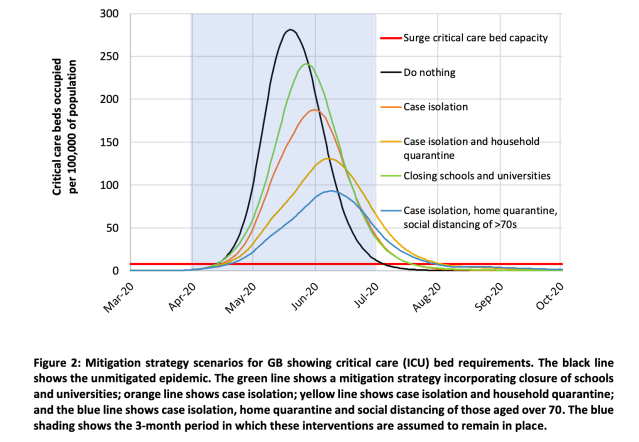
Interesting and thorough paper on COVID-19 disease modeling in the UK and the USA with an emphasis on analysis of each mitigation strategy (quarantine, closing schools, etc) or combination of strategies.  It is a 20-page paper.  So I am reprinting just one figure which shows that the most effective strategy to reduce the need for ICU beds is a combination of

  • Case isolation
  • home quarantine
  • social distancing for those over 70


Screen Shot 2020-03-18 at 12.12.49 AM

There is a lot more in this paper!

Posted in Coronavirus, Health Care, Uncategorized | Tagged , , , , , | Leave a comment

Logarithmic Progression of COVID-19 Creates a Problem

This is a long post to basically say that we are going to run out of hospital beds, ICU beds and ventilators if we don’t enact very strict social distancing/isolation rules immediately.  It is based on the known exponential growth of infected persons: that number doubles every 3 days.
97 known cases today in Suffolk County x 10 (because 90% of cases are unrecognized) x 1024 (2 exp 10th) = 993,280 cases in Suffolk county by April 17th
15% can be expected to be serious cases requiring hospitalization:

993,280 x 0.15 = 148,992 (hospital beds needed in Suffolk County)
21280 x 0.15 = 3192 in East Hampton
Gov. Cuomo:The entire state has only 53,000 hospital beds statewide — and they are, on average, 80% occupied, Cuomo said. That leaves 10,600 available hospital beds in the state. The state has only 3,000 ICU beds, the governor said, with 600 available as of Saturday.

The following is by
Author:  Jason Warner


This is a long post addressing two underlying issues with the current response to the pandemic that leave me concerned.  

For those of you not taking action, or believing the pandemic to be “over hyped”, you can make fun of me as much as you want

For those of you who don’t know me well, I am analytical and metered.  I don’t freak out nor do I respond emotionally.  I also don’t post a bunch of bullshit or political or controversial stuff on Facebook.  I founded and am CEO of a successful software company that provides SaaS based data, analytics, and dashboards to recruiting departments at companies we all know.  As you would expect, I am data driven and fact based.  Before founding my company I held executive roles leading very large recruiting teams at some of the world’s fastest growing companies such as Starbucks and Google.  At Google I was fortunate enough to report to Sheryl Sandberg before she took the Facebook COO role.  I was a Chemical Engineering major in college and have a business degree from a top undergraduate business school.  I am not one for hyperbole or histrionics.  My bullshit factor is close to zero.

I share all this personal information only to help solidify that this post may be worth reading and sharing with others. I would encourage you to forward or share this post at your discretion. 
Many people do not understand what is happening with the pandemic to the degree required which is why I took the time to write this and share this on Facebook.

Now that I’ve gotten the introduction out of the way, here are two issues I want to bring to everyone’s attention.  

ISSUE ONE:  SOCIAL NORMS ARE POWERFUL MOTIVATORS AND GETTING IN THE WAY OF PEOPLE TAKING THE RIGHT STEPS IN RESPONSE TO THE PANDEMIC:  

One of the current problems with addressing the pandemic is the social pressures of taking action today. It’s awkward, and feels like an over-reaction. The reason it feels like an overreaction is that most people OVERWEIGHT the currently reported cases and inherently UNDERWEIGHT the mathematics of how the virus is spreading and what will happen in about 30 days time. This is because our brains tend to think linearly as opposed to logarithmically.  It’s the same reason many people don’t save for retirement or understand compound interest.

To create a new social norm, human beings like to see behavior modeled.  This serves as a signal that says, “oh, someone else is doing it so I should do it also.”  

SO HERE IS A SOCIAL BENCHMARK FOR REFERENCE – THIS IS WHAT I’VE DONE FOR MY FAMILY TO DATE:

I have already isolated my family. We have canceled EVERYTHING. We have canceled previously scheduled doctor visits.  Social get togethers.  Normal routine meetings.  Everything has been canceled.  It’s difficult and socially awkward. Some of you think I’m crazy, but I’m doing it not because I am afraid, but because I am good at math (more on that in part 2).  I had to have my 16 year old daughter quit her job coaching junior gymnasts at the local gym, with one day’s notice and also tell my kids they can’t attend youth group at church. Both of those were tough discussions.  I told a very close friend he shouldn’t stay at my house this weekend even though he was planning to and had booked his flight from the Bay Area.  I canceled another dear friend’s visit for later this month to go snowboarding on Mt Bachelor.

We are not eating out.  Our kids are already doing online school so we don’t have to make changes there.  I would not send my kids to school even if they were in public or private school.  We have eliminated all non-essential contact with other people.  We will only venture out to grocery shop when required.  We will still go outside to parks, go mountain biking, hiking, and recreate to keep ourselves sane and do other things as a family, just not with other people.  We have stocked up on food and have a supply for ~2 months.  We have stocked up on other goods that if depleted would create hardship, like medicines and feminine hygiene products.  We have planned for shortages of essential items.

THE REASON I HAVE CHOSEN THIS ROUTE FOR MY FAMILY IS MULTI FACETED: 

1.    Although my family is considered low risk (I’m 49 in good health, Angi is 46 and in good health, and our kids are 14 and 16), we must assume that the healthcare system cannot help us, because the hospitals will become overwhelmed very quickly.  Most American hospitals will become overwhelmed in approximately 30 days unless something changes.  More on this in part 2 below.  So although we are in great health and unlikely to become gravely ill, the risk is greater if you do not have access to the medical care that you need.  This is something for everyone to consider.  As a society we are accustomed to having access to the best medical care available.  Our medical system will be overwhelmed unless we practice social distancing at scale.  That said, the medical teams in Italy are seeing an alarming number of cases from people in their 40s and 50s.

2.    It’s not a matter of if social distancing will take place, it’s a matter of when.  This is because social distancing is the only way to stop the virus today.  As I will explain in part 2 below, starting now is FAR more effective than starting even 2 days from now or tomorrow. This has been proven by Italy and China (and soon to be France and other European countries who have been slow to respond.).  Wuhan went on lockdown after roughly 400 cases were identified (and they had access to testing that America has systematically failed to do well to date).  The US already has more than 4 times this number of known infected cases as Wuhan did when it was shut down, and our citizens are far more mobile and therefore spreading the virus more broadly when compared to Wuhan.  Yet our response is tepid at best.  

If hand washing and “being smart” were sufficient Italy would not be in crisis.  So I pray the draconian measures are coming from our government, because they are required to stop the spread of the virus.  It’s better to start sooner than later as the cost is actually far greater if we wait.  I pray they close all schools and non-essential services the way that Italy and China have done.

3.    Spreading the virus puts those in the high-risk category at much greater risk.  This is the moral argument.  It’s a strong argument because there are only two ways, as of today, that the virus can be stopped:   let it run its course and infect 100s of millions of people, or social distancing.  There is no other way today.*  If you don’t practice social distancing, people downstream from you that you transmit the virus to will die, and many will suffer.

4.    The risk of infection is increasing exponentially, because the quantity of infected people, most who will not show symptoms, is doubling every three days.  So the longer you wait to self-isolate, the greater the chance of you or someone you love becoming infected and then you infecting others because more of the population is becoming infected.  There are twice as many infected people today as there was on Tuesday.

5.    The virus is already in your town.  It’s everywhere.  Cases are typically only discovered when someone gets sick enough to seek medical attention.  This is important as it typically takes ~5 days to START showing ANY symptoms.  Here’s the math: *** For every known case there are approximately 50 unknown cases.  This is because if I become sick, I infect several people today, and they infect a few people each tomorrow (as do I), and the total count of infected people doubles every 3 days until I get so sick I get hospitalized or get tested and become a “known case”.  But in the time it takes me to figure out I am sick 50 others downline from me now have the virus.  So every third day the infection rate doubles until I get so sick that I realize I have the virus an am hospitalized or otherwise tested.  Harvard and Massachusetts General Hospital estimate that there are 50x more infections than known infections as reported (citation below).  The implication of this is that the virus is already “everywhere” and spreading regardless if your city has zero, few or many reported cases.  So instead of the 1573 reported known cases today there are likely 78,650 cases, at least, in the United States.  Which will double to 157,300 by this Sunday.  And this will double to 314,600 cases by this coming Wednesday.  So in less than 1 week the number of total infected in the United States will quadruple.  This is the nature of exponential math.  It’s actually unfortunate that we are publishing the figures for known cases as it diverts attention away from more important numbers (like the range of estimated actual cases).

6.  Some people cannot, or will not, practice social distancing for a variety of reasons and will continue to spread the virus to many people.  So everyone else must start today.  

The reasons above are why I have begun to practice social distancing.  It’s not easy.  But you should do it too.

The hospitals will be at capacity and there are not enough ventilators. You will hear a lot about this issue in the coming few weeks… the shortage of ventilators. 

ISSUE TWO:  MANY PEOPLE ARE FOCUSED ON THE WRONG NUMBERS:

Yes, the virus only kills a small percentage of those afflicted.  Yes, the flu kills 10s of thousands of people annually.  Yes, 80% of people will experience lightweight symptoms with COVID19.  Yes the mortality rate of COVID19 is relatively low (1-2%).  All of this true, but is immaterial.  They are the wrong numbers to focus on…  

The nature of exponential math is that the infection rates start slowly, and then goes off like a bomb and overwhelms the hospitals. You will understand this math clearly in the next section if you do the short math exercise.  Evergreen hospital in Seattle is already in triage. I have heard credible reports from people on the ground that they are already becoming overwhelmed.  And the bomb won’t really go off for a few more days.  Probably by Wednesday, March 18th (next week).  In just a few days from now we will hear grave reports from Seattle hospitals. 

You should assume the virus is everywhere at this point, even if you have no confirmed cases in your area. 

YOU SHOULD DO THIS SIMPLE 2 MINUTE MATH EXERCISE (NO REALLY TAKE TWO MINUTES AND DO IT):

To further understand exponential growth, take the number of confirmed cases in your area and multiply by 10 (or 50 if you believe Harvard and Massachusetts General estimations) to account for the cases that are not yet confirmed. If you have no confirmed cases choose a small number.  I’d suggest 10 cases in your city, if no cases are yet reported.  But you can use whatever number you like.  This number of infected people doubles every ~3 days as the infection spreads. So literally take your number, and multiply by 2. Then do it again. Then do it again. Then do it again. Do this multiplication exercise 10 times in total. 

2 x 2 x 2 x 2 x 2 x 2 x 2 x 2 x 2 x 2 x (the number of estimated infections in your city today (not just the reported cases)).  
97 cases today in Suffolk County x 10 x 1024 = 993,280 cases in Suffolk county by April 17th

This result is the estimate for the actual cases in your area 30 days from now.  The math will take 30 seconds to complete with a calculator and it’s worth doing the math to see how it grows.  This end number is the number of cases in your city 30 days from today if a large percentage of the population do not practice social distancing.  

2 to the 10th power is 1024.  When something doubles 10 times, it’s the same as multiplying by 1024.  The infection rate of the virus doubles every 3 days. 
Next, divide the final number (the scary big one) you just calculated by the current population of your location (Suffolk county population in 2018:  1,493,350) and you will be able to get the percentage of people who will be infected 30 days from now: 
\
993,280/1,493,350 = 66.5%
For East Hampton (population 32,000 in 2010) that means 21,280 infected persons.

Next take 15% (multiply by 0.15) of that final 30 day number of total infected people. This will provide an estimate of the serious cases which will require acute medical care:
993,280 x 0.15 = 148,992 in Suffolk County
21280 x 0.15 = 3192 in East Hampton
and compare it to the number of beds and ventilators available at your local hospitals:
Gov. Cuomo:The state has only 53,000 hospital beds statewide — and they are, on average, 80% occupied, Cuomo said. That leaves 10,600 available hospital beds in the state. The state has only 3,000 ICU beds, the governor said, with 600 available as of Saturday.


Google the “number of beds” and the name of your local hospital now.  It takes 2 seconds and the number of beds is easy to find.  65% of beds are already occupied by patients unrelated to the coronavirus.  St Charles in Bend, Oregon where I live, has 226 beds and the town is roughly 100,000 people.  Most hospitals have on average, 40 or fewer ventilators.  

These numbers you just calculated are the problem:  Too many patients, not enough beds, and a serious shortage of ventilators (the biggest problem) if we don’t immediately begin social distancing.  More on this biggest problem related to the insufficient quantity of ventilators is below.

COUNTRIES THAT GET OVERWHELMED WILL HAVE A MUCH GREATER MORTALITY RATE BECAUSE THEY WON’T BE ABLE TO ADEQUATELY CARE FOR THE SICK.  

And by sick I mean not just coronavirus patients.  Your son or daughter that needs acute care surgery this May for his badly broken leg will be attended to by an orthopedic doctor that has been working at maximum capacity and working 18 hour shifts for 7 days every week for 6 weeks because it was required to care for all the coronavirus patients at her hospital.  Or the orthopedic surgeon will be sick with the virus and your son or daughter will be operated on by a non-expert or a member of the National Guard.  Your elderly Mom that has diabetes and goes into acute distress next month may not receive ANY care because the doctors are consumed and have to prioritize patients based on triage handbooks filled with success rate probabilities.  Your sibling’s family that are all injured in a terrible car crash in June will have diminished care.  If one of them needs a ventilator there will be none available because all of them will be in use by critical coronavirus patients.  Your young friend with cancer and a compromised immune system from treatment will succumb even though the cancer was curable and the treatment was working, because their body was too fragile to combat the coronavirus due to the chemotherapy and they couldn’t receive the customized, acute care required due to the hospital being overwhelmed.  All of the above is currently happening in Italy, who had the same number of infections we have today just 2 weeks ago.  You must start today.

The count of actual virus infections doubles every ~3 days. The news and government agencies are lagging in their response. So we hear that the US only has 1573 cases today (3/12/20), ( see https://www.worldometers.info/coronavirus/) and it doesn’t seem like a lot.  It would be better to report the estimated actual cases, since reported cases don’t tell us much.  However, we know from China that the actual number of cases are at least an order of magnitude greater than the reported cases, because people get infected and do not display symptoms.  In math, an “order of magnitude” means ten times difference, or put another way, a factor of 10.  100 is 10 times greater than 10, so it’s an order of magnitude greater.  

Harvard Medical School / Massachusetts General Hospital just released their estimate (recording is here:  https://externalmediasite.partners.org/Mediasite/Play/53a4003de5ab4b4da5902f078744435a1d) that the actual cases are 50x greater than the reported cases.  So we likely have 75,000 cases in the United States already.  The number of reported cases is not that important.

But let’s assume the current number of cases is only 10,000 ACTUAL cases in the United States just to be conservative and model out what will happen:

If we don’t stop the virus from spreading, in 30 days we will have 2 to the 10th power more cases of infected people because the infection count doubles every 3 days (the virus doubles every 3 days and there are 10, 3 day periods in 30 days).  

The math: 2 to the 10th power means 1,024 times as many cases as we have today (2 times 2 repeated 10 times).  

This number is a catastrophically big problem for all of us:  We will have 10 million+ actual cases (10,000 actual cases today x 1,024) in the United States in just 30 days’ time if we continue without extreme social distancing.  10 million people with the virus.  And it will keep doubling every 3 days unless we practice social distancing.

15% of cases require significant medical attention, which means that 1.5 million people will require significant medical attention if 10 million people get infected (15% of 10 Million total infections = 1.5 million people requiring hospitalization).  

1.5 million hospitalizations is about 50% more than we have beds for at hospitals in the United States.  And 65% of all beds are already occupied in our hospitals.  But patients with the virus need ICU beds, not just any old hospital bed.  Only about 10% of hospital beds are considered intensive care.  So we will have a huge bed shortage, but that is not the biggest problem, as we can erect temporary ICU shelters and bring in more temporary beds, as Italy has already done, and California and Washington hospitals have already done.  Evergreen Hospital in Seattle has already erected temporary triage tents in the parking lot as of 3/13/20.  All regular beds are full at Evergreen Hospital as of yesterday.

Once the government of China, Norway, and Italy came to understand this math, they reacted accordingly and shut EVERYTHING down.  Extreme social distancing is the only response available to stop the virus today.  The United States is not responding well nor are other countries like France or the UK.  Countries that do not respond well will pay a much larger, catastrophic price.

But hospital beds are not the big problem.  The lack of ventilators is the big problem.  Most estimates peg the ventilators in the United States at roughly 100,000 to 150,000 units.  See https://www.ncbi.nlm.nih.gov/pubmed/21149215 (admittedly dated) and https://theweek.com/speedreads/900850/doesnt-have-enough-icu-beds-ventilators-deal-even-moderate-coronavirus-outbreak

The primary and most serious comorbid (comorbid is a medical term that means co-existing or happening at the same time) condition brought on by the Coronavirus is something called bilateral interstitial pneumonia which requires ventilators for treatment of seriously ill patients.  So if 1.5M people of the 10 million infected 30 days from now require acute care (15% of the 10M estimated total infections), 1.3M may not get the care that they need because we don’t have enough ventilators in the United States.  And remember, this is only if ALL OF US EFFECTIVELY start social distancing by April 11th (30 days from today).

BUT IF WE START EXTREME SOCIAL DISTANCING BY MARCH 23 (12 days from this writing), WE AVOID OVER 1.4 MILLION PEOPLE GETTING CRITICALLY ILL AND OVERWHELMING THE HOSPITALS:

If everyone takes extreme measures to social distance, and the United States can dramatically reduce the spread of the virus 12 days from now, the math is very different, as the exponential growth will only be 2 to the 4th power (12 days divided by the doubling rate of every 3 days equals the exponent of 4):

2 x 2 x 2 x 2 = 16

So instead of 10 Million cases in the United States if we wait 30 days, if we act 18 days sooner, we will have only 160,000 cases (16 times the estimated 10,000 actual cases as of today), of which 15% are likely to require critical care.  This is 24,000 critical patients (a huge difference compared to 1.5 million acute patients).   The difference between taking extreme measures now, versus waiting even a few days, is very large due to how exponents work in math.

***THE OUTCOME IS EVEN BETTER IF WE TAKE ACTION IN THE NEXT 6 DAYS:  If the vast majority of the population self isolates and implements social distancing in only 6 days from now the exponential math is 2 to the 2nd power (6 days divided by the 3 days it takes the virus to double means the exponent is only 2).  In math this is “two squared”.

2 x 2 = 4  

Multiplied by the estimated 10,000 ACTUAL cases as of today (3/12/20) that means only 40,000 total cases will develop, 15% of which may be critical which is 6,000 critical patients.

This is why you should share this post broadly.  If people begin social distancing in the next 6 days it will greatly reduce the impact on all of us.  It’s why they say a “post goes viral”.

SOCIAL DISTANCING WILL REDUCE THE FINANCIAL IMPACT TO YOU AND YOUR FAMILY:

Finally, the longer everyone waits to practice significant social distancing the greater the economic hardship will be on all of us.  Lost jobs.  Mortgage defaults.  Closed businesses.  Bankruptcies.   All will be minimized if you start social distancing today.

Some of the reasons the economic impacts will be reduced are worth mentioning:  If we stop the virus now the overall duration of the outbreak will be far shorter.  The stock market will normalize more quickly and recover more quickly.  Businesses and people will be able to survive a shorter duration outbreak vs a longer duration outbreak.  More companies will avoid bankruptcy if we begin to practice social distancing now.

This is a big financial reason to begin social distancing if you are employed by any company:  if companies see that the virus is being slowed, they will be less likely to conduct layoffs.  You will be more likely to be laid off or experience a job-related event if we don’t practice social distancing immediately.  As an HR executive, I’ve been involved in many, many layoffs.  It’s the last thing companies want to do.  But if they see that the pandemic will be shorter lived vs long and drawn out, they are less likely to make the permanent decision of laying off staff.

The overall economic impact that hits your bank account will be greater if you wait or you don’t practice social distancing.   This is why Norway acted now, because it’s less economic impact to take drastic measures early than to do them later, and it saves a lot of lives and suffering by doing so.  And Norway has only one confirmed death as of this writing.  

START TODAY.  I CAN’T STRESS THIS ENOUGH.  YOU MUST START TODAY.  

Finally, the article that I posted yesterday written by Tomas Pueyo has been read 7M times in the last 24 hours and has been updated with new information.  It’s worth reading again.

Here’s that link.  

https://medium.com/@tomaspueyo/coronavirus-act-today-or-people-will-die-f4d3d9cd99ca

Other up to date data I frequently consult regarding the pandemic is here:

https://www.worldometers.info/coronavirus/

I hope this is helpful and useful.  My brain focuses on the math and I try and be fact based in my analysis and interpretation of how I should respond.

THERE IS MORE INFORMATION IN THE COMMENTS BELOW WORTH READING AND I WILL BE UPDATING THIS POST, AND THE COMMENTS, WITH MORE INFORMATION, (AS OPPOSED TO CREATING NEW POSTS).

MY FINAL PARTING THOUGHT:  Please share or forward this post at your discretion.   If everyone shares this post and two of your friends share this post and so on, we use the power of exponential math to work in our favor, which seems appropriate given the virus is using that same exponential math against us.  

HOW YOU CAN REALLY HELP:  If you know people who have large numbers of followers, or people in the media, please leverage your personal relationship with them and ask them to amplify this post by sharing it.  

For people not on Facebook you can email or text the link.   If you know people in government this fact-based post may help inform them to make the best decisions.  

It’s time for us humans to go on the offensive against the virus.  We must fight back.  

There is only one way to do so:  Social Distancing.  

Do it today.

NOTE:  Anyone, including the media, is free to use this post, any related content, in all or in part, for any purpose, in any format, with no attribution required. Please direct message me if you have other ideas for how to raise awareness.
Posted in Coronavirus, Health Care, Uncategorized | Tagged , | 4 Comments

The Cry for National Leadership

By Perry Gershon

Posted


As President Trump flails in his attempts to lead our country through one of the most severe challenges in our nearly 250-year history, and our local congressman, Lee Zeldin does little more than cheerlead, Governor Andrew Cuomo and County Executive Steve Bellone have displayed the leadership we crave. Good leadership requires empathy, honesty, transparency and the ability to admit your mistakes so that you can fix them. One must tell the truth and be willing to display self-sacrifice when demanding sacrifice from others.  To date, President Trump has completely failed – he bears responsibility for how we got to our current place and must own it if we are to believe his solutions going forward. And we must get there.

Trump’s initial failures in taking the coronavirus crisis seriously continue to impede his ability to effectively gain our confidence or to guide us as a country. At his recent Friday afternoon press conference, the President still refused to admit responsibility for our testing failures. On Sunday he insisted that the crisis is “under control.” Trump’s words fall flat while states and cities are closing public schools, bars and restaurants, and the number of Americans testing positive for the coronavirus is increasing exponentially.

The coronavirus responsible for our current worldwide pandemic, was first reported to the World Health Organization (WHO) in December, 2019.  By January 30, 2020 WHO declared the virus to be a global emergency and by February it was distributing tests to over 60 countries. For inexplicable reasons, Trump’s administration rejected the WHO test and instead decided to make its own – a disastrous process to date and is likely the cause of a dangerous shortage of tests available in the U.S. The Trump administration’s decision in 2018 to fire our entire pandemic response team from the National Security Council without replacing them further limited our ability to respond to this pandemic.

Epidemiologists and other scientists tell us that the key to containing a pandemic is rapid identification. Failure to test people for the coronavirus has created an environment that is ripe for the virus to spread through our community rapidly and undetected. In fact, we remain unsure just how many of us may be carrying the virus and spreading it to others. Large scale testing is the only way we will contain this health crisis. South Korea, which appears to have its epidemic under control, is testing 20,000 people daily.  As of this writing, the high side estimate for total tests administered in the US is a similar number. We will never be in front of the problem until we are testing thousands of individuals a day.

Which brings me back to leadership. Trump’s failures so far are obvious and undeniable – we are missing the boat with testing, and we squandered 45-60 days of advance notice instead of preparing for this pandemic. Rather than warn us of the impending danger, Trump defended his own response and repeated false claims that the viral outbreak is winding down, that he had the situation was under control.  As Congress moved to pass safety measures to take care of those most affected, Trump’s mind focused unilaterally on our financial and corporate markets. Harry Truman’s motto, “The Buck Stops Here,” is totally foreign to this president.

But all of that is past history and we must move forward. It is not too late for Trump to rise to the challenge of one of the most basic tenets of his office. To lead us through this time of uncertainty. Be straight with the American public about what he got wrong and how he is fixing it. Take responsibility for where we are and vow to make it better. There will be a light at the end of the tunnel, but the person delivering that message must have credibility if Americans are to accept it.

And Zeldin might decide that now is the time to open his communication channels with all of us.  Zeldin has not held a true, open invitation town hall since April 2017. This would be a great time to initiate open, online communications.  My congressional campaign has hosted monthly town halls since September 2019, and we are switching to online format this week to avoid public assembly.  Zeldin might want to follow our model.  As of this writing, Suffolk County had over 50 confirmed cases of coronavirus, and that number has no doubt grown significantly.  What is the federal response going to be?  Cuomo has requested that the President mobilize the military to help fight the epidemic – where is Zeldin’s role in this process? There is clear assistance that could come from the Army Corps of Engineers and the National Guard providing both hospital beds and logistics.  We will certainly need it.

America must unite to get to the other side of this health crisis. I believe in Americans and I have no doubt that we will. But it will be much easier if we have a president who will lead us to that other side.

Posted in Coronavirus, economy, Health Care, Trump, Uncategorized, Zeldin | Tagged , , , , | 2 Comments

Hospital Beds Will Run Out

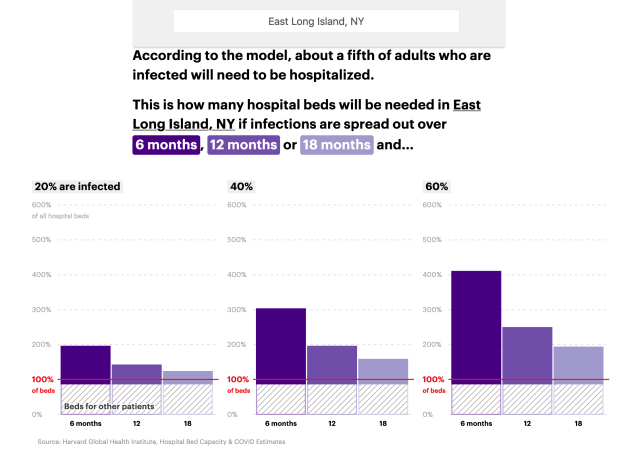
This is a great tool to check the future availability of hospital beds in your area.

On Eastern Long Island we will nearly certainly run out:


Screen Shot 2020-03-17 at 6.13.16 PM

Infections are supposed to peak by early May which puts us in the 6 months category.  Estimates are that up to 50% of the population may be infected and therefore up to 10% of the population may need a hospital bed!   That means about 2000 beds for East Hampton Town!

Headlines from today: Suffolk Coronavirus: 3 Dead; 97 Cases; Drive-Thru Testing Coming

A hospital bed and ventilator shortage exists statewide and new closures may take effect to flatten curve, Cuomo says.


There should be contingency plans to create makeshift hospitals such as in schools, or meeting rooms, or large halls (LTV in East Hampton).

Posted in Coronavirus, East Hampton, Uncategorized, Zeldin | Tagged , , | Leave a comment

Velocity of COVID-19 spread

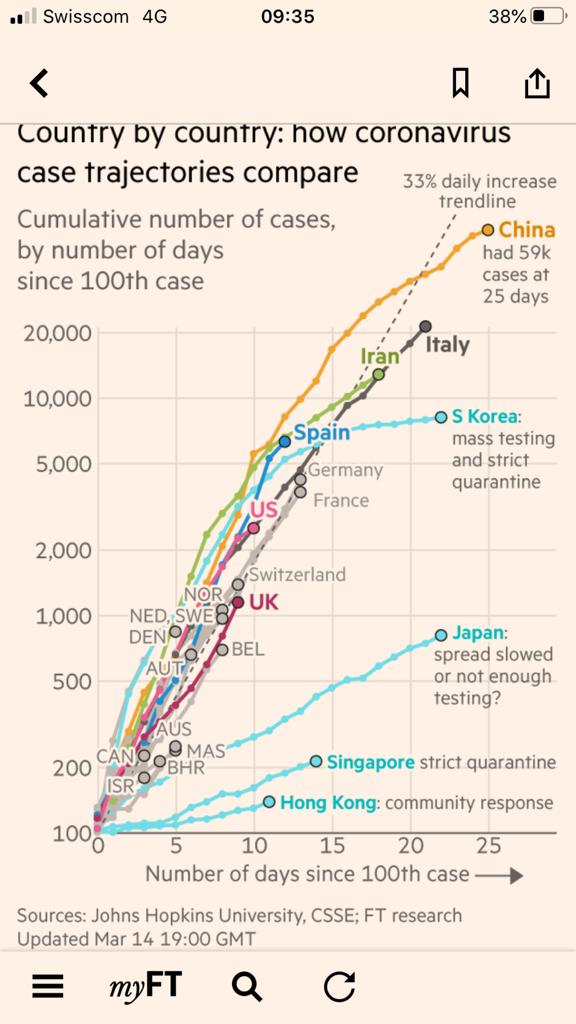
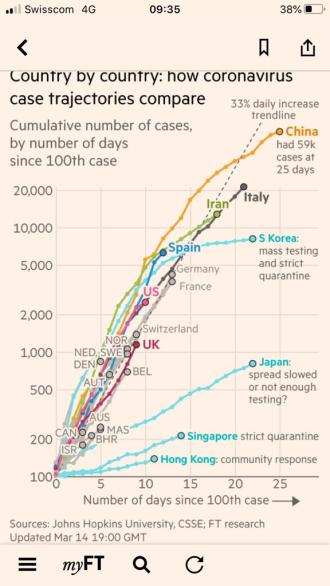
This is a measure of how fast the COVID-19 virus is spreading in different countries:

from the Financial Times by Steve Bernard, and

PHOTO-2020-03-15-23-06-30

The steeper the slope, the faster the virus is spreading.  When the slope levels off, as for Hong Kong, Singapore, Japan and S. Korea, that is good news.  Note the probable causes for containment of the virus such as aggressive quarantine and mass testing.  Also, note that absence of data (people not getting tested) can make it appear that the virus is contained when it really isn’t (Japan?).

One of the steepest slopes, right on par with Italy and Spain, is the US!  S. Korea was able to change their COVID-19 progression by mass testing and strict quarantine.  So all hope is not yet lost for the US.  But we may be in for stormy seas.

In a large country like the US, local measures (such as strict quarantines) can be effective locally and the outcome of the epidemic can vary considerably from one town to another.  A classical example comes from the 1918 Spanish Flu pandemic. Philadelphia delayed crowd control measures.  They did not cancel the Liberty Loan Parade, a patriotic wartime effort.  But St. Louis, canceled its parade. In the end, the death toll in St. Louis did not rise above 700, but was greater than 12,000 in Philadelphia.  It’s an example of what not to do during a pandemic, according to CDC’s Division of Global Migration and Quarantine.

Please take public health measures seriously!  Lest we end up like Wuhan: video on the earliest phases of the COVID-19 outbreak in Wuhan, China


Posted in Coronavirus, Health Care, Trump, Uncategorized | Tagged , , , , , , , , | 4 Comments

State of Emergency: COVID-19

Screen Shot 2020-03-14 at 11.33.32 PM

Thank you East Hampton Star, for running the historical piece “Then and Now” on March 12th:

“Dr. David Edwards, the town health officer in 1918, reported six cases of influenza in early October. A week later there were 35 cases, and the Neighborhood House on Three Mile Harbor Road was turned into a temporary hospital. Dr. Edwards ordered the village movie theater closed that week as well. The next week, there were 125 cases….Edward O. Lester, 25, appears to have been the first East Hamptoner to die of influenza…  Many of the dead were young, like Mr. Lester. ”

COVID-19 has been likened to the Spanish Flu of 1918, and it is much more serious than our annual seasonal flu.

“Covid-19 is not the flu. It’s worse,” writes Brian Resnick in VOX.  Propublica agrees:  This Coronavirus Is Unlike Anything in Our Lifetime, and We Have to Stop Comparing It to the Flu”

Screen Shot 2020-03-09 at 2.37.18 PM

Comparisons with the Spanish Flu of 1918 are discussed here.  While the mortality rates may be similar there are important differences:  According to National Geographic, Spanish flu killed with deadly speed, with many reports of people who woke up sick, then died on their way to work.

But perhaps the most important difference between the two viral diseases comes down to historical timing. The Spanish flu pandemic coincided with World War I, which helped the disease quickly spread along with mobilized troops from place to place. In contrast, many nations have enacted travel restrictions to areas high in coronavirus COVID-19 infections with the purpose of preventing quick spread.

I decided to watch 2 videos.

1. A 40 min video on the 1918 Flu pandemic (Spanish Flu).  It is a reminder of a) how scary a pandemic can be, b) what strict containment measures can achieve, c) how leaders that do not follow public health advice get us into trouble.  NB: President Wilson got infected by the Spanish Flu and was quite ill.

2. A 45 min Youtube Australian video on the earliest phases of the COVID-19 outbreak in Wuhan, China.  It is a scary reminder of what may lie ahead for all of us.  Seen through the eyes of Australian families stuck in Wuhan since the very beginning of the outbreak.

I know these are long videos, but you probably have plenty of time and are stuck at home.   East Hampton has declared a state of emergency. Suffolk County has too.  You might want to understand why!

Posted in Coronavirus, Health Care, Trump, Uncategorized | Tagged , , , , , , | 3 Comments

COVID-19 disease modelling

Excellent article in the NY Times:

Projections based on C.D.C. scenarios show a potentially vast toll. But those numbers don’t account for interventions now underway.

One of the CDC’s top disease modelers, Matthew Biggerstaff, presented four possible scenarios — A, B, C and D — based on characteristics of the virus, including estimates of how transmissible it is and the severity of the illness it can cause….  Highlights:
  • Between 160 million and 214 million people in the United States could be infected over the course of the epidemic, according to one projection….
  • The pandemic could last months or even over a year, …
  • As many as 200,000 to 1.7 million people could die worldwide…
  • 2.4 million to 21 million people in the United States could require hospitalization, potentially crushing the nation’s medical system, which has only about 925,000 staffed hospital beds. Fewer than a tenth of those are for people who are critically ill…
  • Studies of previous epidemics have shown that the longer officials waited to encourage people to distance and protect themselves, the less useful those measures were in saving lives and preventing infections.
  • Even severe flu seasons stress the nation’s hospitals to the point of setting up tents in parking lots and keeping people for days in emergency rooms. Coronavirus is likely to cause five to 10 times that burden of disease…
  • A preliminary study released on Wednesday by the Institute for Disease Modeling projected that in the Seattle area, enhancing social distancing — limiting contact with groups of people — by 75 percent could reduce deaths caused by infections acquired in the next month from 400 to 30 in the region.
  • A recent paper, cited by Dr. Fauci at a news briefing on Tuesday, concludes that the rapid and aggressive quarantine and social distancing measures applied by China in cities outside of the outbreak’s epicenter achieved success. “Most countries only attempt social distancing and hygiene interventions when widespread transmission is apparent. This gives the virus many weeks to spread,” …
  • During the Spanish Flu pandemic a century ago, comparing the experiences of various cities, including what were then America’s third- and fourth-largest, Philadelphia and St Louis. In October of that year Dr. Rupert Blue, America’s surgeon general, urged local authorities to “close all public gathering places if their community is threatened with the epidemic,” such as schools, churches, and theaters. “There is no way to put a nationwide closing order into effect,” he wrote, “as this is a matter which is up to the individual communities.”  The mayor of St. Louis quickly took that advice, closing for several weeks “theaters, moving picture shows, schools, pool and billiard halls, Sunday schools, cabarets, lodges, societies, public funerals, open-air meetings, dance halls and conventions until further notice.” The death rate rose, but stayed relatively flat over that autumn.

By contrast, Philadelphia took none of those measures; the epidemic there had started before Dr. Blue’s warning. Its death rate skyrocketed.

Posted in Coronavirus, Health Care, Uncategorized | Tagged , | 3 Comments

Still no COVID testing available?

A researcher at Hackensack Meridian Health Center for Discovery and Innovation in New Jersey works on developing testing for the novel coronavirus. (Kena Betancur/AFP/Getty Images)
March 12, 2020 at 6:24 p.m. EDT

Many Americans who are sick and seeking a coronavirus test continue to be turned away, creating a vexing problem for patients and health officials as the virus spreads. The problem persists, doctors and patients across the country say, despite increased production and distribution of the tests in recent days.

At a time when U.S. fatalities from the virus have risen, there remain limited numbers of tests and the capacity of laboratories is under strain.

The constraints are squeezing out patients who don’t meet rigid government eligibility criteria, even if their doctors want them tested, according to dozens of interviews with doctors and patients this week.

The gap between real-life obstacles to testing and President Trump’s sweeping assurances that “anybody that needs a test gets a test” has sown frustration, uncertainty and anxiety among patients who have symptoms consistent with covid-19, the disease caused by the virus, but have been unable to find out whether they are infected.

“It’s really been unbelievably infuriating,” said Remy Coeytaux, a North Carolina physician with a doctorate in epidemiology who tried to get tested for covid-19 but was turned down by the state public health department. He had not traveled abroad, was not sick enough to be hospitalized and had no known contact with an infected person.

At the time Coeytaux tried to get tested, there was only one confirmed case of covid-19 in the state. “It’s out there,” he said. “But we just haven’t been testing.”

The federal government’s handling of testing erupted as a political issue Thursday, with even members of the president’s party venting about not being able to get answers on when the nation would see more commercial tests, faster testing and more widely available tests.

Sen. James Lankford (R-Okla.) acknowledged that Trump’s recent statement about tests for anyone who wants them is “not consistent right now” with what is actually happening.

A U.S. Centers for Disease Control and Prevention laboratory test kit for the coronavirus. (CDC/AP)

As of Thursday evening, more than 1,600 people were infected in the United States, and more than 40 had died, according to researchers at Johns Hopkins University.

Since mid-January, the Centers for Disease Control and Prevention and other public health laboratories have tested about 11,000 specimens for the disease. The number of people who have been tested is likely far lower than that tally, however, because labs usually test at least two specimens per person, experts said. In contrast, South Korea has been running 10,000 tests per day.

“The system is not really geared to what we need right now, to what you are asking for. That is a failing,” Anthony S. Fauci, director of the National Institute of Allergy and Infectious Diseases and a member of Trump’s coronavirus task force, said Thursday, testifying before the House Oversight Committee. “The idea of anybody getting it easily the way people in other countries are doing it, we’re not set up for that. Do I think we should be? Yes.”

In an address from the Oval Office on Wednesday evening, Trump said his administration was responding “with great speed and professionalism.” “Testing and testing capability are expanding rapidly, day by day,” he said. “We are moving very quickly.”

States determine who is eligible for public covid-19 testing in accordance with CDC guidelines. In the early weeks of the outbreak, as the CDC struggled to roll out tests, the agency strictly limited testing to those most likely to be infected and most in need of acute care. Even a person with a fever and a cough who had traveled to a country with widespread community transmission — such as China, Iran or Italy — could not get tested unless they were sick enough to be hospitalized.

Amid mounting criticism, Vice President Pence declared last week that with a doctor’s orders, “any American can be tested.” Trump took that message a step further after a tour of the CDC last Friday, calling the tests “beautiful” and twice declaring anybody needing a test would get it.

The CDC loosened its rules, giving states and clinicians more discretion.

The number of medical professionals and patients who are denied access to tests is not tracked nationally. But in interviews, people from states as varied as Wisconsin, North Carolina, Washington, Indiana and New York said their doctors sought but were unable to get testing approval from local or state health officials.

Coeytaux, a 56-year-old family doctor and professor at Wake Forest School of Medicine in Winston-Salem, N.C., came down with a fever, shortness of breath, a dry cough and a deep ache in his lungs last Tuesday, he said. Two days later, he tested negative for flu and 15 other common respiratory viruses. He believed he was probably infected with the new coronavirus.

A county public health nurse agreed and called the state health department. She handed over her cellphone to Coeytaux, and he explained his situation. “They wouldn’t test me,” he said, because he didn’t meet the eligibility criteria.

Coeytaux said he wanted to get tested not only to protect his own patients, but also to protect his partner, who is a registered nurse, and her patients.

Kelly Haight Connor, a spokeswoman for the North Carolina Department of Health and Human Services, said the state is following CDC guidance and sent Web links to state documents that seemed to offer conflicting descriptions of who would be eligible for testing. She did not respond to a request for clarification.

“It’s very infuriating for us who work in this world,” said Amy Schabel, a public health worker in Milwaukee. “The messaging out there is completely inaccurate and inconsistent with what’s happening.”

Schabel, 32, returned last week from a vacation to Spain and northern Africa that included a trans-Mediterranean ferry ride with passengers who were noticeably ill, she said. Over the weekend, she developed a high fever, difficulty breathing and other symptoms consistent with the virus, she said.

On Monday morning, she went to an urgent-care center in downtown Milwaukee. Her flu test came back negative, and her doctor said he wanted her to get tested for covid-19. But after more than a half-hour of trying to reach city and state health officials to get approval, she said the doctor gave up.

“Unfortunately, he wasn’t able to get a response from them,” she said Tuesday, sick and self-quarantined in her home.

By Wednesday, her condition had deteriorated. She went back to the urgent-care center, and this time, she was able to get a test. It would take at least 24 hours to get a result, she was told, and still was waiting as of midday Thursday.

A spokeswoman for the Wisconsin Department of Health Services called the situation “unfortunate.” On the same day Schabel was turned away, the state instructed doctors they no longer needed government approval to order tests, Jennifer Miller said. A spokesman for the hospital did not respond to requests for comment.

Increasing pressure on labs

Experts say public health laboratories are generally not designed to do high-volume testing. Commercial and academic laboratories — which can test people who don’t meet CDC criteria — have begun processing samples only in the past few days and are still ramping up their capacity. The federal government does not have a way to count the tests that those labs are running, which means federal officials do not know how many Americans have been tested.

[Have you tried to get tested for coronavirus and been turned away? Share your experience with The Post.]

Limited testing in the early days of disease transmission not only increases the risk of the disease being spread by people who don’t realize they have it, but also affects the ability of public health officials and hospitals to plan for a prolonged outbreak.

“It’s difficult to predict the impact on the health-care system in the coming month because we don’t have any precision about the burden of disease around the country,” said Tom Inglesby, director of the Center for Health Security of the Johns Hopkins Bloomberg School of Public Health. “We’ve got to close that gap as quickly as we can.”


It is not just positive results that matter, but negative results, too. The negatives help researchers understand whether increasing numbers of covid-19 cases are a result of an epidemic or arise simply because testing expanded.

“When we monitor the flu, one of the indicators is the proportion of people who test positive versus negative. That positive proportion gives a very important number in terms of tracking how the epidemic is moving,” said Justin Lessler, an associate professor of epidemiology at Johns Hopkins and lead writer on a recent study estimating the incubation period of the coronavirus.


Administration officials have tried to reassure the public they’re rapidly expanding access to tests. Last Friday officials said they had shipped 1.1 million tests to labs across the country.

But nationwide, as of Wednesday, the nation’s public health, academic and commercial laboratories had the ability to process only about 16,530 patients per day, according to an estimate compiled by former Food and Drug Administration commissioner Scott Gottlieb and researchers at the American Enterprise Institute. That figure is growing as labs bolster efforts and is expected to reach 20,000 per day by the end of the week, according to Gottlieb.


In the meantime, some large research hospitals are trying to bypass the bureaucratic logjam.

“Our access to testing was entirely based on what the state would allow,” said Daniel Varga, chief physician executive at Hackensack Meridian Health in northern New Jersey.

Researchers at the hospital began developing an in-house test several weeks ago. The hospital planned to start using it this week.

Varga estimated that “a handful” of patients exhibiting signs of the virus had been turned down for testing by the state because they did not meet the criteria.

In Indiana, an emergency-room doctor at a community hospital said she had tried to get three patients tested, two of those after the CDC liberalized its guidelines.

Both patients had flu-like symptoms and CT scans that showed lung problems consistent with covid-19, and both were in severe enough distress that they needed to be admitted to the hospital. Both also tested negative for a panel of 20 common respiratory viruses.

But neither had a history of travel or been in contact with a confirmed infected person. In the two cases after the loosened guidelines, when the doctor called the state health department to request testing, the request still was denied.

“Since I watched all three cases get denied, it made me realize that they weren’t testing anyone,” said the doctor, who spoke on the condition of anonymity because she did not have permission from her employer to speak to a reporter.

Sick and chasing a test

In early March, Marcy Klein of New Rochelle, N.Y., came down with a fever and a dry cough, just as a coronavirus cluster transformed her Westchester County town into the nation’s first containment zone.

A week later, still hacking and taking Tylenol to keep her temperature down, she sought a test for the coronavirus. Though her symptoms were mild, the ­64-year-old worried about her husband, a 71-year-old physician with diabetes.

On Wednesday, a hospital nurse told her she didn’t meet the testing criteria: She hadn’t traveled outside the country recently and she hadn’t had any known contact with someone who tested positive.

The uncertainty has left Klein feeling paralyzed.

“I don’t want to feel like I’m giving the virus to anybody,” she said.”

A spokeswoman from Westchester County declined to comment on Klein’s experience.

A spokeswoman for Montefiore Health System, Laura Ruocco, said the hospital has had to prioritize patients given the limited access to testing.

In Washington, D.C., doctors repeatedly declined to test a woman who got sick after spending three days with a delegation visiting from her company’s home office in northern Italy.

“I realize health care is an imperfect process, but this is just kind of ridiculous,” said David Johnson, whose wife has been sick for 1½ weeks with symptoms akin to covid-19.

He spoke on the condition that his wife, an Italian living in Washington, not be identified to avoid complicating her application for a green card.

On March 2, days after the visit, his wife came down with a fever, body aches, congestion and a cough. Since then, she has gone three times to an emergency room at MedStar Georgetown University Hospital. She has been unable to persuade anyone there to test her for the virus because she had not traveled to Italy and could not confirm she had been in close contact with anyone who had tested positive, her husband said — though she later learned that an unidentified person from the home office had.

She tested positive for a trace amount of the H1N1 virus — a form of flu. But when the couple asked whether that meant she could not have covid-19, they said they did not get an answer.

Told of the woman’s attempts, a MedStar Georgetown spokeswoman, Debbie Asrate, said Thursday that the facility “has been working closely” with the CDC and the District’s health department and following their guidelines.

In the District, people can be tested by the public health laboratory when they are showing symptoms and have a known exposure to a laboratory-confirmed case of covid-19, or have traveled to one of several countries with widespread transmission, or are living in long-term care facilities, said D.C. Health Director LaQuandra Nesbitt at a news conference Wednesday. She said health-care providers can get other people tested by sending their samples to commercial labs.

“From an epidemiological risk perspective, she absolutely should have been tested,” said Jeanne Marrazzo, director of the Division of Infectious Diseases at the University of Alabama at Birmingham. “She was in close contact with visitors from the epicenter of the epidemic.”

On Wednesday, 10 days after she fell ill, she was finally able to get tested at a D.C. urgent-care clinic. She was told it would take about four days to learn the results.

Andrew Ba Tran and Fenit Nirappil contributed to this report.

Posted in Coronavirus, Health Care, Trump, Uncategorized | Tagged , , | Leave a comment

Trump’s Incompetence

Published as Letter to the Editor in The East Hampton Star, March 12 edition

Shocked
East Hampton
March 9, 2020

Dear David:

During an impromptu press conference at the Centers for Disease Control and Prevention on Friday, President Trump: maintained that anyone who wants to get tested for coronavirus can (not true); said he preferred the cruise ship off the coast of San Francisco stay offshore because “I don’t need the numbers to double because of one ship;” asked about the ratings he got on a Fox News town hall the night before (“I’ve been told the ratings were record-breaking”); and repeatedly talked about how shocked he was to find out that the flu kills people.

Trump’s incompetence is on display nearly every time he speaks, but watching an entire press conference (or reading a transcript) lays bare the full extent of his rambling incoherence, breathtaking ignorance, and vicious pettiness. November can’t come soon enough.

Sincerely,

CAROL DEISTLER

Posted in 2020 elections, Coronavirus, GOP, Trump, Uncategorized | 2 Comments

Census 2020

Via Dr. Eve Krief on Facebook.

#Census2020
The Census starts arriving in mailboxes today! Complete by mail, online or by phone . Our responses will determine the allocation of crucial federal funding our communities rely on!

https://2020census.gov/en.html

89238823_820630401754178_1068699888876781568_n

Note:

Vox:
“It looks like Trump is trying to trick people into filling out “census” forms online”

Fight back, >>


Trump cronies have found yet another scheme to manipulate redistricting:

➢ The RNC is sending out political mailers that look like official census documents. (The state of Montana even warned voters about the scam.)

➢ The Trump campaign ran deceptive Facebook ads to trick people into filling out fake “census” forms.

We’re going to have to fight harder than ever to ensure fairness in the face of these shady practices. Can you pitch in to help?

Let’s review all the ways Trump and Republicans have attempted to manipulate the 2020 Census in order to supercharge their gerrymandering:

➢ They tried to add a discriminatory citizenship question to depress census participation among immigrant communities and communities of color. If they’d been successful, Republicans would have gotten more seats than they were due in Congress and state legislatures.

➢ When the Supreme Court shot down their plan, they started compiling other types of data to try to diminish minority voices during redistricting.

➢ And now they’re using misleading mailers and online ads that look like official census documents which could depress census participation.

There’s no limit to how low they’re willing to stoop, David. But we’re committed to fighting them tooth and nail until we achieve a fair census and fair elections.

Time is running out before voters go to the polls for the last time before redistricting. Will you rush a donation NOW?

Posted in census, long island, Uncategorized, Zeldin | Tagged , , | Leave a comment

Why do many British people not like Donald Trump?

Nate White’s stunning answer to the question: Why do many British people not like Donald Trump?

It was a question asked on Quora February 12, 2019: Why do many British people not like Donald Trump?

Nate White is a London-based copy writer, an advertising guy. His Quora profile says, “Drinks coffee. Writes copy.” Nate took a swing at answering the question.

The 90 year-old Queen is forced to go around our idiot President,
who doesn’t even know how to walk properly.” (The Wow Report)

Sadly, for some reason the thread has been deleted from Quora (threats from Trump’s side?) Several people were inspired to preserve it on blogs and in other forms. Ronald Lebow (@RonaldLebow) posted the piece in a series of Tweets, a thread.


Here is Nate White’s answer to the question, “Why do some British people not like Donald Trump.”

A few things spring to mind…

Trump lacks certain qualities which the British traditionally esteem.

For instance, he has no class, no charm, no coolness, no credibility, no compassion, no wit, no warmth, no wisdom, no subtlety, no sensitivity, no self-awareness, no humility, no honour and no grace – all qualities, funnily enough, with which his predecessor Mr. Obama was generously blessed.

So for us, the stark contrast does rather throw Trump’s limitations into embarrassingly sharp relief.

Plus, we like a laugh. And while Trump may be laughable, he has never once said anything wry, witty or even faintly amusing – not once, ever.

I don’t say that rhetorically, I mean it quite literally: not once, not ever. And that fact is particularly disturbing to the British sensibility – for us, to lack humour is almost inhuman.

But with Trump, it’s a fact. He doesn’t even seem to understand what a joke is – his idea of a joke is a crass comment, an illiterate insult, a casual act of cruelty.

Trump is a troll.

And like all trolls, he is never funny and he never laughs; he only crows or jeers.

And scarily, he doesn’t just talk in crude, witless insults – he actually thinks in them. His mind is a simple bot-like algorithm of petty prejudices and knee-jerk nastiness.

There is never any under-layer of irony, complexity, nuance or depth. It’s all surface.

Some Americans might see this as refreshingly upfront.

Well, we don’t. We see it as having no inner world, no soul.

And in Britain we traditionally side with David, not Goliath. All our heroes are plucky underdogs: Robin Hood, Dick Whittington, Oliver Twist.

Trump is neither plucky, nor an underdog. He is the exact opposite of that.

He’s not even a spoiled rich-boy, or a greedy fat-cat.

He’s more a fat white slug. A Jabba the Hutt of privilege.

And worse, he is that most unforgivable of all things to the British: a bully.

That is, except when he is among bullies; then he suddenly transforms into a snivelling sidekick instead.

There are unspoken rules to this stuff – the Queensberry rules of basic decency – and he breaks them all. He punches downwards – which a gentleman should, would, could never do – and every blow he aims is below the belt. He particularly likes to kick the vulnerable or voiceless – and he kicks them when they are down.

So the fact that a significant minority – perhaps a third – of Americans look at what he does, listen to what he says, and then think

‘Yeah, he seems like my kind of guy’

is a matter of some confusion and no little distress to British people, given that:

Americans are supposed to be nicer than us, and mostly are.

You don’t need a particularly keen eye for detail to spot a few flaws in the man.

This last point is what especially confuses and dismays British people, and many other people too; his faults seem pretty bloody hard to miss.

After all, it’s impossible to read a single tweet, or hear him speak a sentence or two, without staring deep into the abyss. He turns being artless into an art form;

He is a Picasso of pettiness; a Shakespeare of shit.

His faults are fractal: even his flaws have flaws, and so on ad infinitum.

God knows there have always been stupid people in the world, and plenty of nasty people too. But rarely has stupidity been so nasty, or nastiness so stupid.

He makes Nixon look trustworthy and George W look smart.

In fact, if Frankenstein decided to make a monster assembled entirely from human flaws – he would make a Trump.

And a remorseful Doctor Frankenstein would clutch out big clumpfuls of hair and scream in anguish:

‘My God… what… have… I… created?’

If being a twat was a TV show, Trump would be the boxed set.

Posted in Trump, Uncategorized, Zeldin | Tagged , , , , , , | 1 Comment

COVID-19 is here!

We now have a confirmed case admitted at Southampton Hospital.  It is time to reassess.   Although there is but a single patient confirmed on the South Fork of Long Island, suspicion is running high. (update 3/11: 6 cases in Suffolk county including one in the retirement home PECONIC LANDING).  A local physician tells me that patients with potential COVID-19 symptoms are examined in the parking lot, in their cars, by the physician (wearing protective gear).  This is in order to avoid transmission to critical medical staff in the office.  Healthcare professionals are a known risk group for contacting COVID-19. But physicians on the South Fork are still struggling to get testing for their patients.

Delays in testing

A few days ago I called the Suffolk County Department of Health to inquire about getting COVID-19 tests done on people that had recently returned from international travel to countries with now well-documented outbreaks.  These persons also had flu-like symptoms.  The county officials thought this did not meet CDC criteria for testing (no high fever and no acute respiratory distress) and they recommended self-isolation.  I know first hand how unreliable self-isolation can be!  A recent news report confirmed my suspicions when a Missouri patient’s family broke quarantine to attend a school dance!

The problems seem to have been threefold — the Centers for Disease Control did not move quickly enough to manufacture test kits at scale (either because of lack of funding or political will) nor did it open up testing options to other institutions that could have worked to develop tests — and because of the limited availability of tests, the CDC rationed how many tests were performed. Those issues were compounded by the initial release of faulty tests by the CDC in early February.

As former U.S. Food and Drug Administration official Scott Gottlieb wrote on Twitter in early February, “Since CDC and FDA haven’t authorized public health or hospital labs to run the tests, right now #CDC is the only place that can.

Also, the CDC has somewhat arbitrary criteria (?) for placing countries on the list of places that will increase your risk of having contracted COVID-19.  Here is a list of countries with documented cases as a percentage of the population size.  Level 3 Travel Health Advisory (CDC) applies only to the top 4 on the list.  Note that  Bahrain with 5.42 documented cases/100,000 inhabitants does not make the list while China with 5.79 does! Neither does Switzerland with 3.96 cases, where many cases have been tourists from its southern neighbor, Italy.

Screen Shot 2020-03-09 at 1.22.27 PM

The above graph comes from a local Swiss Newspaper (NZZ) – test your German skills!

By January there was a test available.  It was offered worldwide by Roche, Inc. FOR FREE and to any country in the world!  The US declined the offer.  Read more about these early missteps here.

PHOTO-2020-03-07-04-54-04

The above report is from a Zurich Newspaper: note the date on the sample is Jan 29th 2020.

Note also, patients that took the test were billed about $200 (SFR 180) for labor of administering the test.  That was their entire cost.

At the time an astute observer commented: “It’s very difficult to understand that countries like the US didn’t seize the opportunity to get the test for free. Perhaps some US companies wanted to make money by developing their own tests?”

Thermo Fisher Scientific corporation provides the COVID-19 test in the US currently. According to the Associated Press, Donald Trump, has listed investments in Thermo Fisher Scientific Corporation (TMO), which moved jobs out of the U.S. in high profile outsourcing deals. Apparently, Donald Trump stands to profit from medical testing of coronavirus that will now take place in the United States.

The response by the administration

The reason that COVID-19 cases are low in the USA is most likely because it has been difficult to get patients tested.

For instance,  a recent CDC conference gave us a glimpse into Trump’s view of the coronavirus as a political rather than health issue.  Trump said he would rather have the passengers of the Grand Princess, a cruise ship docked in San Francisco with 21 confirmed cases on board, stay on the ship than move to land — all because doing so would raise the number of total Covid-19 cases in the US:

“I would rather because I like the numbers being where they are,” Trump said. “I don’t need to have the numbers double because of one ship that wasn’t our fault.”

It is unclear how many people have been infected by the virus due simply to a delay in testing, but it has become increasingly clear in recent days that there are Americans infected with the virus across the country.  It is naive to think that one can suppress the numbers.

Trump fears the fall out on the economy and indirectly on his political chances in November. But his actions are likely to make things worse for himself.

The coronavirus outbreak has U.S. companies starting to shutter offices and send workers home through layoffs, furloughs or directives to telecommute until health risks from the spreading virus recede.  Even if that’s helpful to guard against further spread of the disease, it’s triggering widespread uncertainty and the biggest threat to the labor market since the financial crisis almost a dozen years ago.

The evidence is expected to show up through lost consumer spending.
“If workers can’t work … production and income go down,” Georgetown University economist Harry Holzer said. “That becomes a demand problem if workers lose income and stop spending.”  When that happens, “odds of recession can go way up.”

Eleven states, including California, Massachusetts and New York, require employers to offer workers paid leave, as does the District of Columbia. But none of these jurisdictions explicitly guarantee the benefit to healthy workers on leave because a virus outbreak sent everybody home.

Fourteen Democratic senators last week wrote to leaders of the Business Roundtable, the Chamber of Commerce and the National Association of Manufacturers to urge their member companies not to penalize workers for going home during the outbreak.
Paid sick days are particularly rare for low-income workers. Ninety-three percent of workers in the top tenth of the income distribution get paid sick leave, compared with only 30 percent of those in the bottom tenth, according to the Economic Policy Institute, a left-leaning think tank.

Our Healthcare system can not handle a pandemic efficiently

Finally, let’s consider our health care system and how it is ill-suited to handle a pandemic: America’s Health System Will Likely Make the Coronavirus Outbreak Worse
Out-of-network costs, high deductibles, and confusing coverage options may keep people from getting tested or receiving care (Abigail Abrams)

Deductibles, networks, and a complicated insurance bureaucracy—that already make it tough for many Americans to afford medical care under normal conditions will likely make the outbreak worse.

First, people must actually choose to get tested—a potentially expensive prospect for millions of Americans. While the government will cover the cost of testing for Medicaid and Medicare patients, and for tests administered at federal, state and local public health labs, it’s unclear how much patients will be charged for testing at academic or commercial facilities, or whether those facilities must be in patients’ insurance networks. Just recently, a Miami man received a $3,270.75 bill after going to the hospital feeling sick following a work trip to China. (He tested positive for the seasonal flu, so did not have the new coronavirus, and was sent home to recover.)

Those who test positive for COVID-19 possibly face an even more financially harrowing path forward. Seeking out appropriate medical care or submitting to quarantines—critical in preventing the virus from spreading further—both come with potentially astronomical price tags in the U.S. Last month, a Pennsylvania man received $3,918 in bills after being released from a mandatory U.S. government quarantine after he and his daughter were evacuated from China. (Both the Miami and Pennsylvania patients saw their bills decrease after journalists reported on them, but they still owe thousands.)

In 2019, 82% of workers with health insurance through their employer had an annual deductible, up from 63% a decade ago, according to a report from the Kaiser Family Foundation. The average deductible for a single person with employer insurance has increased from $533 in 2009 to $1,396 last year.  The timing of the new coronavirus at the beginning of the year makes the outlook even worse: because most deductibles reset each January, millions of Americans will be paying thousands out of pocket before their insurance companies pay a cent.

Many patients may simply decide not to go to the doctor, which is “exactly the opposite of what we want to happen in this type of situation.”

Public health experts and Democrats have also criticized the Trump administration’s decision to allow people to sidestep the Affordable Care Act’s rules and buy limited, short-term health insurance coverage. Such “junk plans,” are not required to cover diagnostic tests or vaccines.

A large group of health, law and other experts released a letter this week urging policymakers to “ensure comprehensive and affordable access to testing, including for the uninsured.”

The Trump Administration is considering using a national disaster recovery program to reimburse hospitals and doctors for treating uninsured COVID-19 patients. And even Republicans, who have traditionally opposed health care paid for by the government, are warming to the idea. “You can look at it as socialized medicine,” Florida Rep. Ted Yoho, who has vocally opposed the Affordable Care Act, told HuffPost this week. “But in the face of an outbreak, a pandemic, what’s your options?”


Posted in Coronavirus, East Hampton, Health Care, long island, Medicaid, medicare, Trump, trumpcare, Uncategorized | Tagged , , , , | Leave a comment

Sanders’ Vaporware

Published as an LTE in the East Hampton Star.

Vaporware
Springs, February 24, 2020

Why doesn’t Bernie Sanders level with voters as to how he plans to pay for his flagship “Medicare for All” plan? The answer is simple: He can’t.

Take a look at Sanders’s official campaign website and take a look at his program for Medicare for All. If as Senator Warren says Pete Buttigieg’s plan is nothing more than a “Post-it,” the Sanders plan is more like a postage stamp. Nowhere does his campaign site include a plan for paying for his pie-in-the-sky program. After spending seven-plus years of foisting this plan on voters, one would think he would be able to explain it to us. He can’t, because it is unworkably expensive.

In short, it is nothing but political vaporware. What is vaporware? When the term was in vogue it described efforts by software companies to promise a non-existent product to deceptively discourage customers from buying an existing competitive product (or discourage competitors from developing one). So what Sanders is doing is deceptively attracting voters to a Medicare for All plan that promises everything but will deliver nothing.

And what’s even worse is that there is proof of his plan’s nonviability from an actual attempt to launch a similar plan. And guess where that plan was tried? Vermont (Bernie’s home state)! In 2011, then-Governor Pete Shumlin euphorically promised a single-payer plan, dubbed Green Mountain Care. Backed by advocates bordering on the “theological,” Green Mountain Care (encouraged by Senator Sanders) promised a system of health care for all that would save money, even though no one knew what it would cost when it passed in 2014.

That belief proved hopelessly naïve. As the Green Mountain plan moved into implementation, it became clear that the plan would double Vermont’s budget, would require raising state income taxes by up to 9.5 percent, and imposing an 11.5-percent payroll tax on employers.

The Green Mountain Plan crashed in flames in 2014, after the governor realized that the only economically viable plan would offer Vermonters less protection than they already had.

So there is every reason for Senator Sanders to avoid discussing how his Medicare for All plan would be financed (other than in the broadest of generalities, like “taxes would go up.” (Yes, but how much?) There is an equally obvious reason why he fails to even mention the failed Vermont plan, and a mysterious absence of any explanation of how his plan would correct the deficiencies of the Vermont plan he touted at the time.

Given Senator Sanders’s evasions, it is incumbent upon voters (and his competitors) to put his feet to the fire and force him to explain in detail, with data, how his plan would be paid for and why it would behoove 150 million Americans to vote for a candidate who would deprive them of their existing health care for an unknown product. Until he comes clean, it’s vaporware, and voters should beware of being duped. Taking him on faith could not be more dangerous.

Sincerely,  BRUCE COLBATH

Posted in Health Care, Medicaid, medicare, Uncategorized | Tagged , , , , | Leave a comment

Exposing Lee Zeldin’s Record on Healthcare

the-republican-healthcare-bill-would-bring-close-to-unprecedented-chaos-in-the-health-systemRemember the Graham Cassidy bill?


By Perry Gershon

Representative Lee Zeldin (R-NY1) is a master at telling half-truths. He goes to great lengths to tell his constituents that he supports healthcare coverage for people with pre-existing conditions and lowering prescription drug prices, but his voting record says differently. Zeldin voted against coverage for pre-existing conditions, and just recently shot down a bill for prescription drug coverage reform and prescription drug coverage reform. He even has the audacity to take credit for programs he voted against. A quick look at his record, however, is quite revealing.

Lee Zeldin voted to repeal the Affordable Care Act (ACA). He has cast several such votes in his three terms in office, most recently May 2017 (and he openly urges the courts to overturn the ACA now). The federal requirement to provide coverage for people with pre-existing conditions comes directly from the ACA, so Zeldin’s opposition to coverage for pre-existing conditions is right there in his votes! Zeldin and Trump claim to offer ACA-replacement legislation that provides for pre-existing condition coverage, but these bills do not protect consumers, especially those with pre-existing conditions. They provide no requirement that these individuals will not be penalized in pricing and availability of coverage.

When Congress, in December 2019, passed its bill to make prescription drugs more affordable, Lee Zeldin voted against the bill (HR-3). His position on this critical issue is again demonstrated by his vote. The only effective way to control the cost of prescription drugs is to let Medicare, the largest consumer, negotiate drug prices directly with the manufacturers. It’s no surprise that Zeldin continues to prohibit Medicare from negotiating because much of his campaign contributions come from drug makers and their affiliates. This isn’t me saying this, it’s right there in his campaign finance reports that he is legally obligated to file with the Federal Election Commission. Given Zeldin’s benefactors, it’s no wonder he opposes true prescription price reforms.

Zeldin takes credit for funding medical research at Stony Brook. His most recent February “newsletter” stated that he secured $3 million of new NIH grants to Stony Brook for medical research, and he cites a bi-partisan letter he signed requesting a budget increase specifically for NIH research. What Zeldin does not tell you is that when the actual budget came to a vote on July 25, 2019, he voted against it. His own voting record proves that Zeldin did not vote to increase NIH appropriations or increased funding for Stony Brook.

But Zeldin’s biggest deception of all is that he is has listened and knows what his constituents need for their healthcare. Again, the facts belie that. Zeldin’s last public town hall was in April 2017, before his vote to repeal the ACA. He has not held one since then. He has no idea what his constituents want or need!

Town halls are meant to be open to ALL constituents who want to attend. There should be no prescreening of questions or questioners (to exclude critics) or else it is not really a true town hall. I know this from first-hand experience.

I have held five open town halls since last September and I will hold five more before the end of June. I take questions from Democrats, Republicans – whoever attends and wants to ask a question. As a matter of fact, I take each and every question asked of me and I give truthful fact-based answers. There is no pre-screening and no spin at my town halls.

People on Long Island deserve a representative who will listen to them when they speak out about healthcare. I want to see universal healthcare for everyone – and I believe we can do it with the ACA supercharged with a public option. We need to allow Medicare to negotiate drug prices to achieve true pricing reforms. This November, we have a chance to give NY-1 a representative who will fight for us in Washington and tell us the truth here at home.

Originally published in the Village Times Herald

Posted in drug costs, Health Care, Medicaid, medicare, perry gershon, Trump, Uncategorized, Zeldin | Tagged , | 1 Comment